
Last Updated on April 2, 2026 by Kristin

True to their name, hazard lights help drivers alert other drivers to use caution. Here’s what you need to know about when to use hazard lights.
Hazard lights can help drivers see you and potentially offer help in emergency situations. But hazards can make emergency situations more dangerous if you use them incorrectly.
What are Hazard Lights?
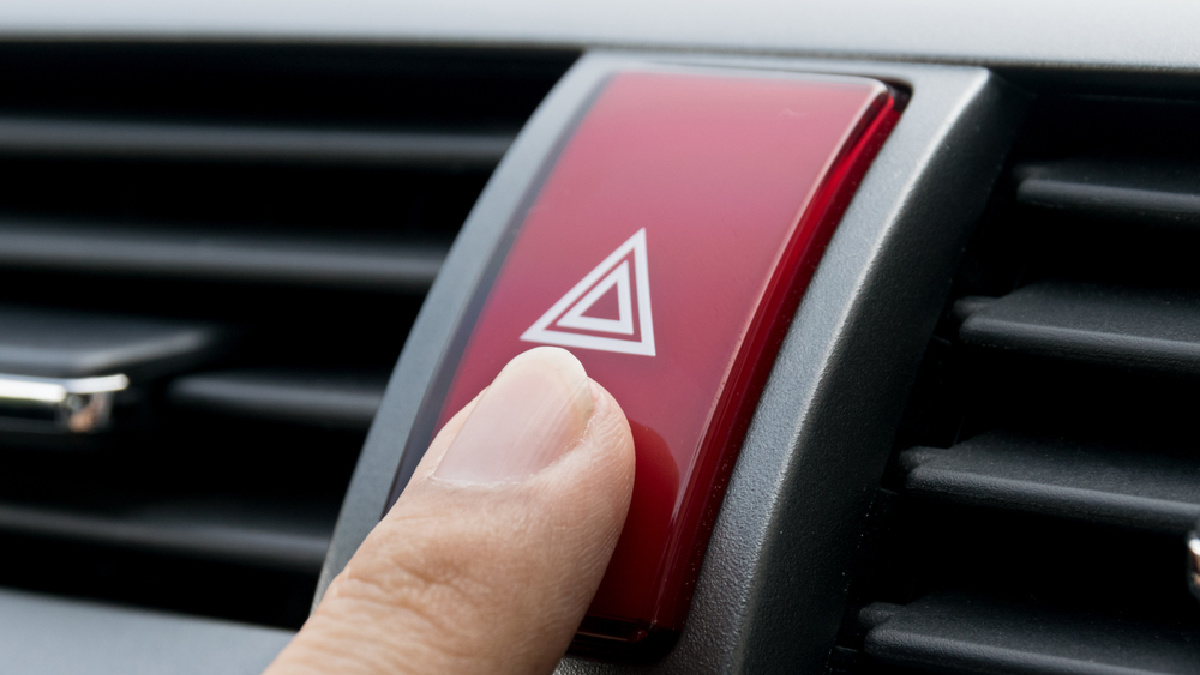
Hazard lights are the yellow flashing lights that you can activate by pressing a button, which usually features a triangle. On most cars, this button is located on the dashboard or center console of the vehicle.
Use hazard lights sparingly, as they indicate that you may be experiencing an emergency. Drivers often turn on their hazards when they are stopped or pulled over, letting other drivers know they should proceed with extra caution.
Laws about when and when not to use hazard lights vary by state.
When to Use Hazard Lights
Here are some common situations when you might need your hazards.
Pulling Over: If you’re experiencing a mechanical issue with your car and are in a position to safely pull over to the side of the road, hazard lights indicate to other drivers that you need to exit traffic. You should also use hazards when pulling over for the police, fire trucks, ambulances or other emergency vehicles.
Breakdowns: Hazard lights let other drivers know that the vehicle is obstructing traffic. You can also use your hazards to warn other drivers about unexpected obstacles blocking traffic, such as a fallen tree.
Funeral Processions: Cars participating in a funeral procession often use hazard lights to indicate they are part of a group of vehicles. If you encounter a funeral procession, wait for the entire line of cars to pass before proceeding. Always check local traffic laws first to make sure you can use hazards during a procession.
When Not to Use Hazard Lights
Bad Weather: Don’t drive with your hazard lights on in bad weather just because you’re going slowly, unless you’re trying to signal that your car is experiencing an emergency. Otherwise, drivers may think you are stopped and try to go around you, only to find that you’re just driving a bit more slowly than usual.
Driving at Normal Speeds: Using hazard lights when driving normally is not a good practice, especially at higher speeds. This can confuse drivers, and may even be illegal in some states. Hazard lights notify drivers that you’ve slowed down or stopped due to an emergency or obstacle in the road, or are trying to exit traffic and pull over.
Parking in Unauthorized Areas: While using hazards for pulling over is acceptable, you can’t park anywhere you want just because you have flashing lights on. If you leave your hazard lights on while parking in an unauthorized space and are not experiencing an emergency, you can still get a fine or warning. If you need to run an errand or leave the vehicle, it’s best to park in an authorized area instead of leaving the car with the hazards on.
Check Local Laws
Each state has its own set of rules governing the acceptable uses for hazard lights, with several prohibiting their use unless the driver is facing an emergency situation. For example, Florida now allows drivers to use hazards in low-visibility conditions on roads with a speed limit of 55 mph, whereas using hazards when driving in inclement weather without an emergency is illegal in Louisiana.
If you’re renting a vehicle and planning to drive in an area you’re not familiar with, always check local laws to understand when you’re allowed to use them. This also goes for countries outside of the U.S., which may have different rules about when to use hazard lights.
Related: