
Last Updated on July 1, 2026 by Kristin
A car’s high beams can come in handy when traveling on dark roads, providing additional visibility. However, there are times when they make you less safe. Here’s a guide to when to turn on your high beams, and when to stick with your regular lights.
What are High Beams?
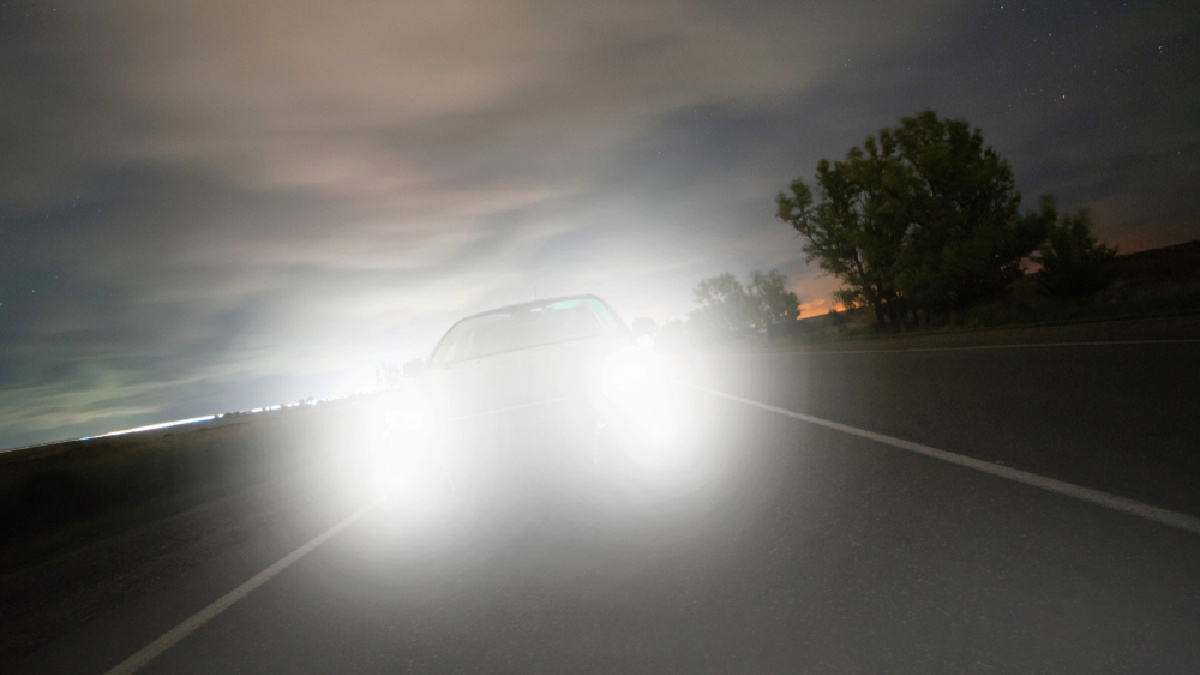
High beams are a more powerful version of your headlights. They provide much greater visibility in dark areas than your regular headlights, which are also known as “low beams.” However, high beams shouldn’t be used in oncoming traffic, as they are powerful enough to severely limit an oncoming driver’s visibility.
In many cases, you can activate a car’s high beams by pushing the lever on the left side of the steering wheel. A blue light should appear on the dashboard when they are activated. Some car models also have a setting to automatically adjust the headlights based on the level of light outside.
When Should You Use High Beams?
High beams are mainly used on rural roads at night when regular headlights just don’t cut it. If you’ve ever driven on a road so dark you can barely see anything in front of you with regular headlights, that’s the exact type of situation when you’d use high beams. These stronger lights are typically needed on roads without streetlights, but should be avoided in urban areas.
When Should You Avoid High Beams?
High beams provide increased visibility, which sounds great in theory. However, having brighter lights is not always a good thing. Using high beams in the wrong situations can actually present serious safety issues for you and other drivers.
Here are some situations when you should avoid using high beams:
Nearby vehicles: Avoid using high beams when another car is approaching, or if you’re following closely behind another car. If you’re using high beams and see another car coming your way, switch to your regular headlights until the car passes. Check each state’s traffic laws for specific rules on when you should turn off your high beams when other cars are present.
Rain, Fog or Snow: High beams will make foggy, rainy or snowy conditions even worse. Because high beams reflect water droplets, you’ll see a glare that greatly reduces your visibility when trying to use them in bad weather. Always use your regular headlights during bad weather.
Urban Areas: Avoid using high beams in urban areas with lots of traffic. If you’re driving on a typical city road with streetlights, you don’t need to use the high beams. Using high beams in a well-lit area can make it hard for pedestrians and other drivers to see where they’re going. Also, you may get a ticket for not using your brights properly.
Check Local Laws Before Using Your Brights
Each state has its own laws about how to use high beams and may outline fines for drivers who do not follow the rules. For example, California’s traffic laws require drivers to dim their high beams when they come within 500 feet of another car to avoid temporarily blinding the other driver with the glare of their headlights. The law also instructs drivers to use their regular headlights when following behind another car within 300 feet.
High beams can be useful when driving on lonely rural roads at night, but they can present a safety hazard when not used properly. Be sure to turn off your high beams when other cars approach you to avoid temporarily blinding the other driver with the glare of your lights. Also, avoid using high beams during inclement weather and on roads with streetlights.
Related: